writing
A Man on Mars has been 16 years away since 1901
Nov 2026
There will be movable stairs, also, so that people with large and heavy bundles will just have to push a button while standing on the stairs and then up they will go. Then there will be machines to do the thinking for the school children.
Reinhard Huelner, aged 13, Franklin School, Minneapolis; imagining 2019 in the Minneapolis Journal, October 1904
We often say how prescient and wise writers have been of the future. HuffPost begged Nikola Tesla to “teach us your secrets of wisdom” for predicting the smartphone in 1926; Fortune praised Arthur C. Clarke’s “stunningly accurate predictions” of machines that “will start to think” in 1964; BuzzFeed found Isaac Asimov’s 1964 vision of 2014 “frighteningly accurate”, adding, at one point, “NAILED IT”.
I feel little Reinhard has been done a great disservice; he beat Arthur C. Clarke by 60 years; and he didn’t predict children would be “born on the Moon [by the 1990s]”.1
Forecasting is hard.
Especially more than five years out — where experts do little better than chimps2, octopuses3, or 13 year olds.
Yet we keep doing it, over and over again. Sometimes, like Reinhard, we are right; sometimes through sheer will we pull into existence that very thing that we predict will happen.
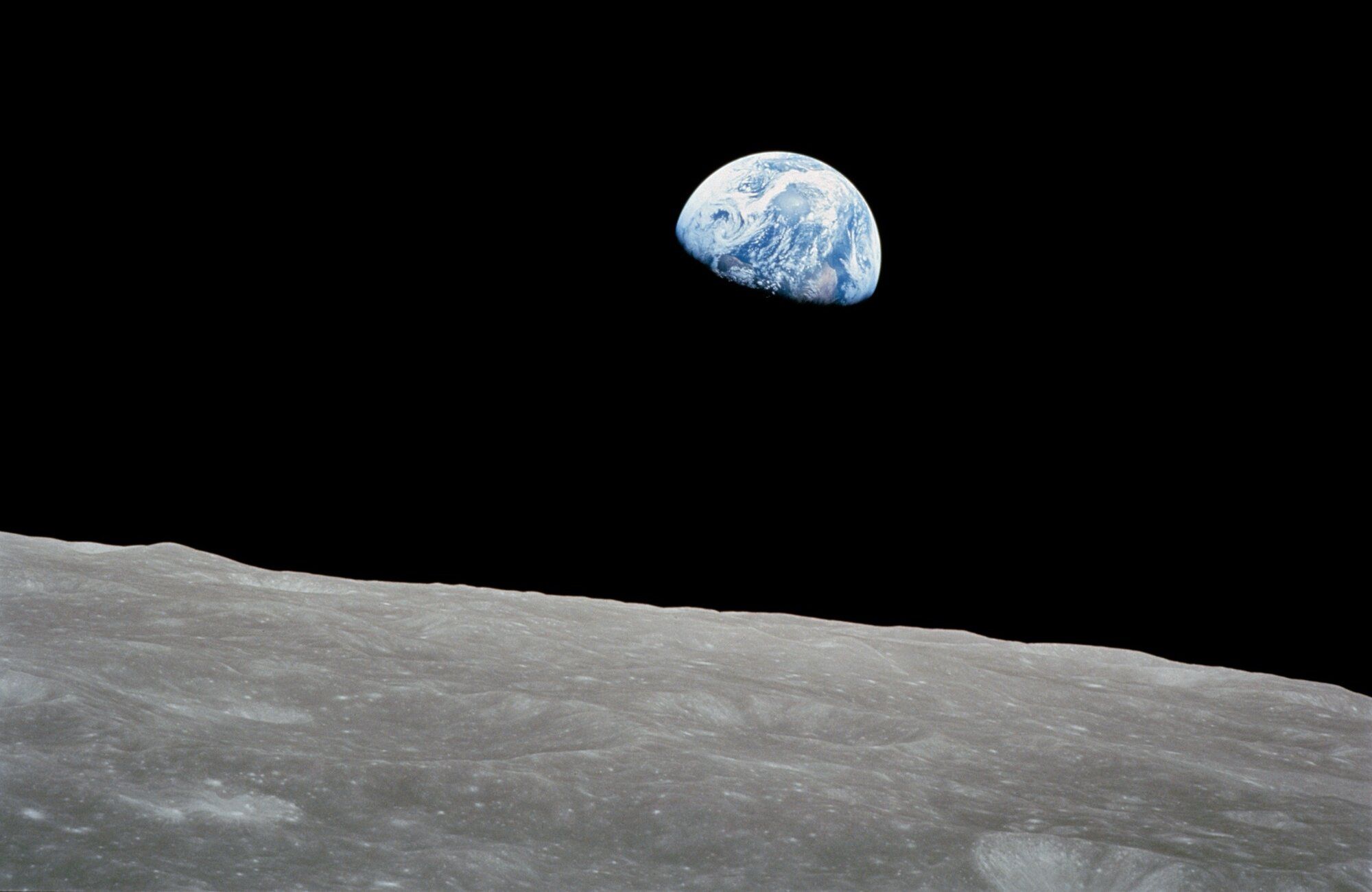
The moon landing was thought to be at least 50 years away4 — we then achieved it in 20.
At the same time we have a long trend of shattered promises — next year, we’ll change the world. Oh - I said that last year - don’t worry, this year it will really happen. Look how much has changed since I made that prediction last time! We’re way closer now.
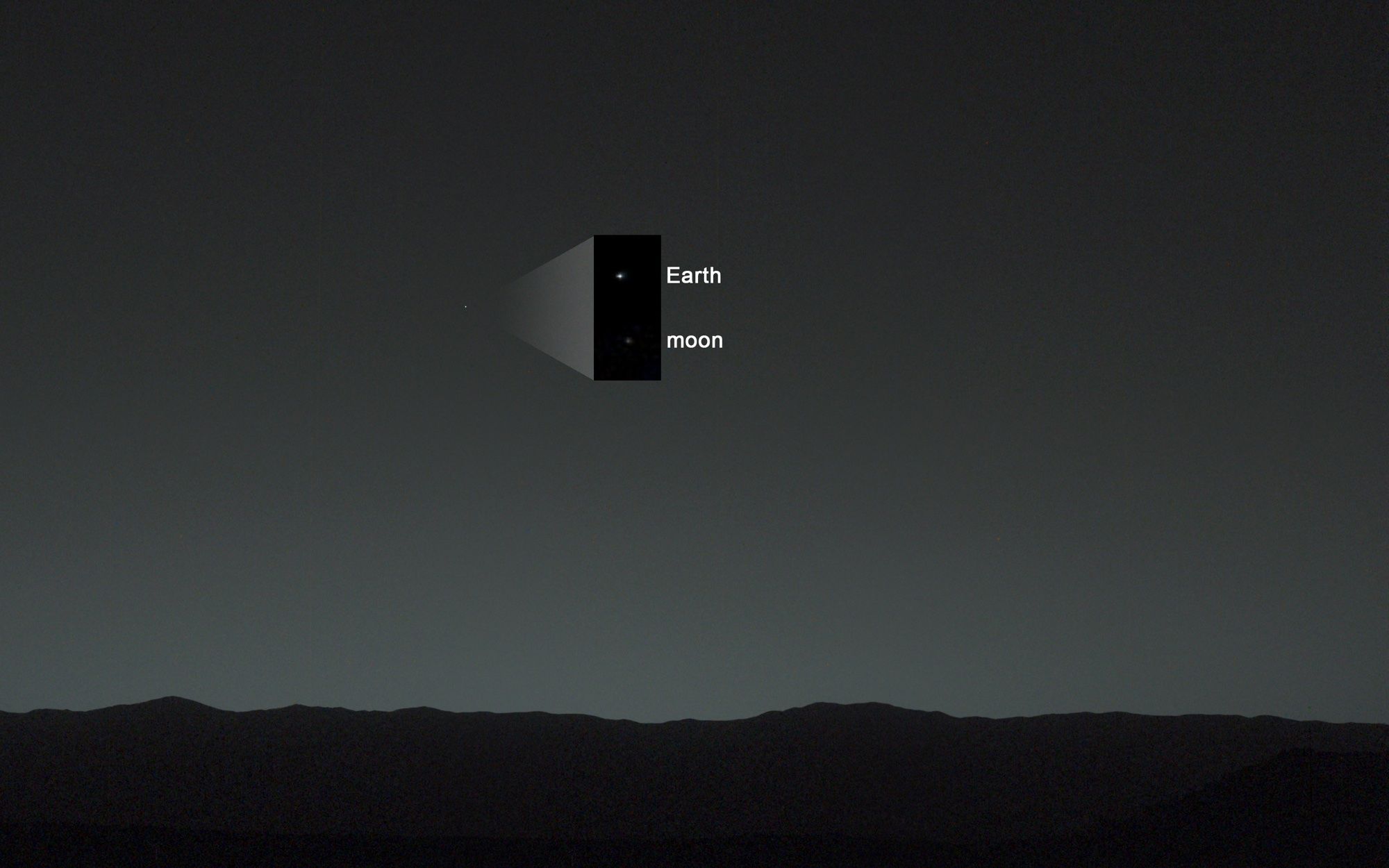
Yet, Man on Mars is not a headline that has run. Maybe we made the mistake of thinking it was closer than it really is. The Moon and Mars don’t feel that much further away from each other; they smoosh together in some ineffable ‘very far away’ zone. We lack the yardstick to make sense of it.
Apollo 11 reached the Moon in three days and was home in eight: quite an intense fortnight. A crew bound for Mars spends seven months getting there, and then has to wait for the planets to line up again before it can leave. NASA’s own plans put the round trip at two and a half years; most of a university degree.5
Perhaps that explains why you and I would think that Mars would come quicker than it did, but why did the Soviets and NASA keep predicting so soon?
Sadly, not all children are prophetic geniuses, like Reinhard — Harriet Hewitt, sixth grader, said in 1904 that there would be a crewed Mars landing just 15 years away — years before the Soviets and NASA started, wrongly, claiming the same thing.
More than just Mars
This pattern - of forecasting far out events at static intervals - occurs in far more than just Mars.
In December 1949, Gallup pollsters found that only 15 percent of Americans believed humans would reach the Moon within 50 years, while 15 percent had no opinion, and a whopping 70 percent believed that it would not happen within that time.
Moving Goalposts
It’s even clearer when we isolate to just one person or organisation as they revise their own dates. We can look back in history and pull out all the predictions that have been made. The eternity of the internet is a wonderful thing.
Musk asserts that crewed Starship vehicles would follow, at the earliest in 2026, two years after the first cargo flights.
I’d like to draw particular attention to Peter Wadhams - who spent decades measuring Arctic ice from Royal Navy submarines. In 2012, he forecast an ice-free Arctic by 2016. In the summer months, you would be able to take an ordinary boat and sail through the North Pole.6
In 2023 he called it “embarrassing for me because I kept forecasting, that we see ice would disappear and it never did … we don’t know how fast it’ll be or when it will happen”. By 2025: “it’s a lesson in not extrapolating from data … of course I don’t make predictions anymore”.7
Think you’d do better?
human-level AI · quote 1 of 8
Suppose my projections are correct, and the hardware requirements for human equivalence are available in 10 years for about the current price of a medium large computer. Suppose further that software development keeps pace (and it should be increasingly easy, because big computers are great programming aids), and machines able to think as well as humans begin to appear in 10 years.
Footnotes
-
Arthur C. Clarke, Profiles of the Future (1962), in the chapter on gravity: “A man who has lived for a few years on the Moon […] would be a helpless cripple back on Earth […] and children born on the Moon (as they will be within another generation) might never be able to make the adjustment.” A generation of 25 to 30 years puts those children somewhere between 1987 and 2003, depending on which edition you count from. ↩
-
From Superforecasting (Tetlock & Gardner, 2015), the average expert was roughly as accurate as a dart-throwing chimpanzee. Tetlock complains that the finding mutated, “as in the children’s game of ‘telephone’”, into “all expert forecasts are useless” and “experts know no more than chimpanzees”. ↩
-
Paul the Octopus called all eight of his 2010 World Cup matches. ↩
-
Gallup, December 1949 (best sourced; from NASA’s own history, SP-4407): 70% of Americans said no one would reach the Moon within 50 years. ↩
-
Perseverance took 203 days to reach Mars in 2020—21. NASA’s Design Reference Architecture 5.0 assumes about 180 days each way and some 500 days on the surface waiting for the next return window, which opens once every 26 months. ↩
-
An open-water Arctic would also be quite the short cut. Rotterdam to Yokohama is 11,580 nautical miles through Suez, about 30 days at sea. By my reckoning, sailing up past Norway, over the North Pole and down through the Bering Strait is about 6,600 nautical miles: 43% shorter, and about 17 days at sea, saving nearly a fortnight. ↩
-
Facing Future, uploaded March 2023, and Climate Emergency Forum, recorded 30 July 2025. His last dated forecast in the dataset is from December 2020: “soon it will disappear within a very few years of now”. ↩
Comments
Select any passage to comment on it. Everyone viewing comments here sees your comment and name; leave the name blank and you get a made-up one. Your email, if you give it, only reaches me. You can edit or resolve your comments later from this browser.
Loading comments…